Supporting Patients in Emergency Clinical Situations
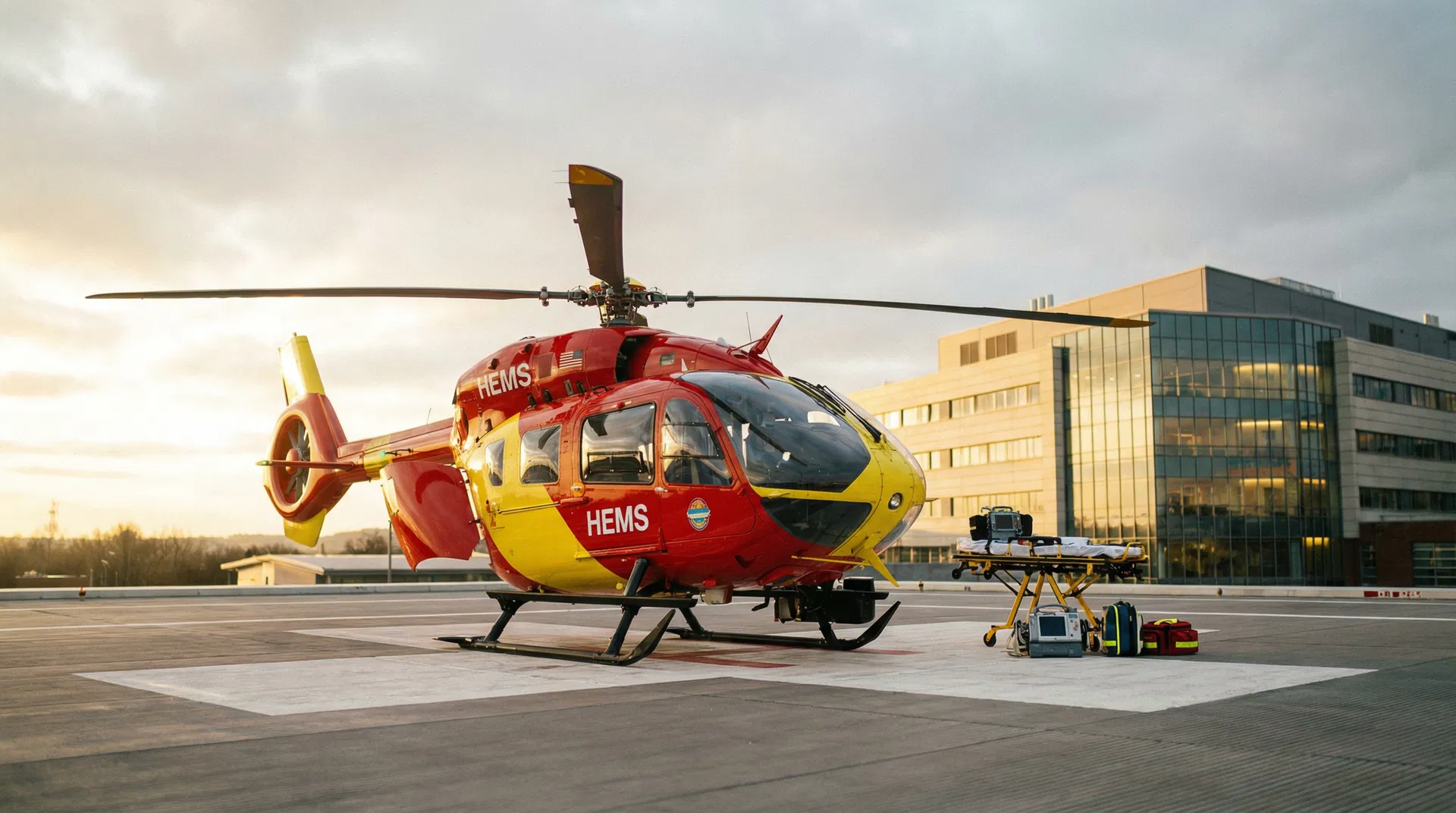
The Bespoke Air Ambulance Programme provides HEMS teams with an effective approach to safely deliver essential emergency care and treatment to patients with impaired capacity in confined environments.
In brief: Air Ambulance courses from ProActive Approaches. This bespoke programme builds on our Clinical Holding Courses and is specifically designed for HEMS teams operating in confined environments.
- Bespoke 2-day course designed specifically for HEMS teams
- Covers legal context, theory, emergency interventions, and realistic scenario work
- Adapted to your specific aircraft configuration and team setup
- Gary Collins (RGN), 32 years of clinical nursing experience
- We come to you with all equipment and materials
Built on Proven Clinical Holding Expertise
The Bespoke Air Ambulance Programme builds on the success of our Clinical Holding Courses and has been specifically designed for HEMS teams. The Clinical Holding Courses were originally developed following consultancy work with A&E departments, Great Ormond Street Hospital, national charities and adolescent mental health provisions.
Our team also has significant experience (8 years) in trauma management training for armed police and public order medics. Many of the lessons learned during this period have been applied to our courses, ensuring they are not only instructional but also realistic.
The programme provides staff with an effective approach to safely deliver essential emergency care and treatment to people with impaired capacity and AMS (Altered Mental State) in confined environments.
Four Core Areas of Training
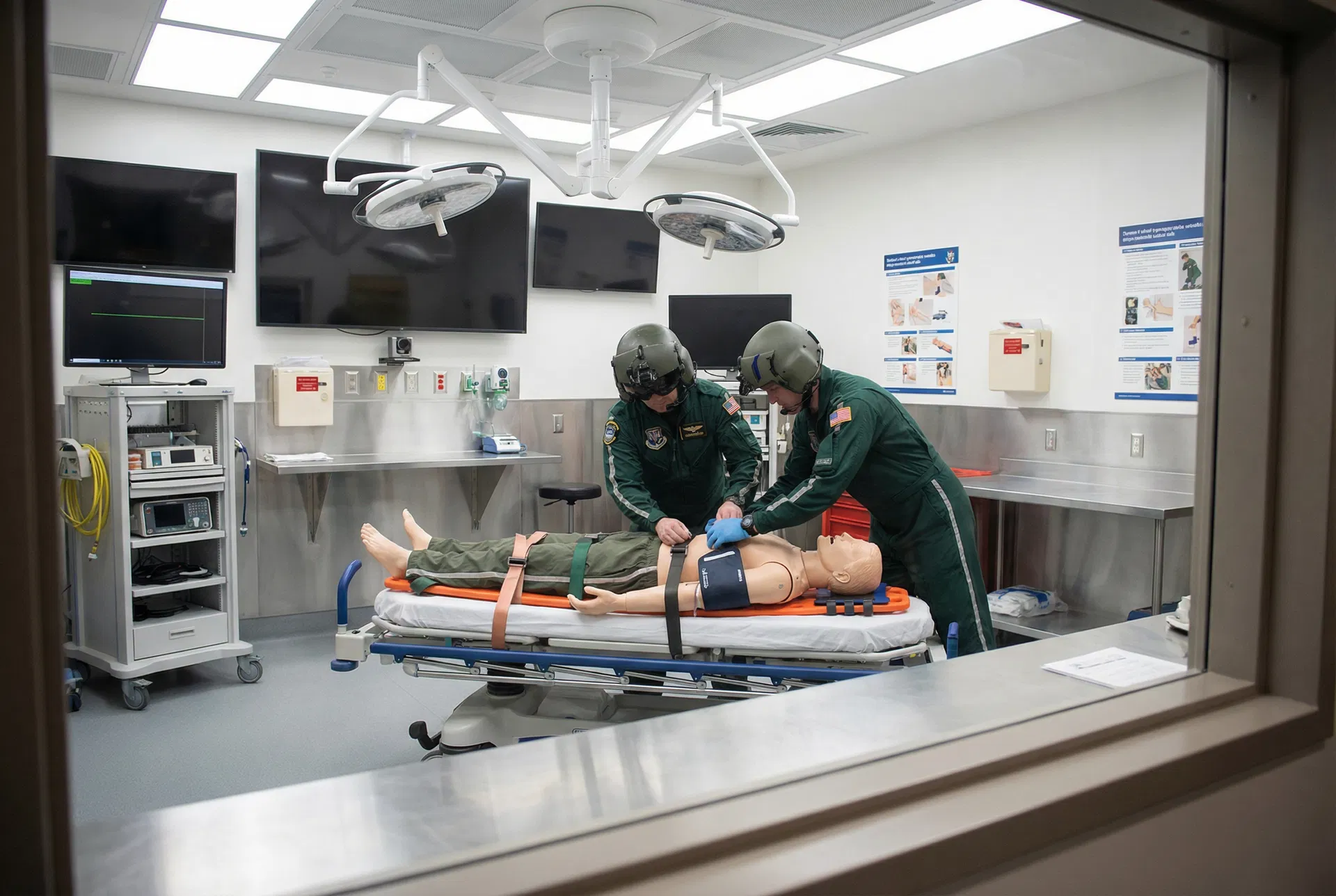
The programme is structured around four essential areas, ensuring comprehensive coverage from legal foundations through to realistic scenario-based practice.
Legal Context
The legal framework in relation to physical intervention during emergency clinical procedures.
Primary & Secondary Theory
Robust theoretical grounding covering all necessary elements to ensure a comprehensive programme.
Emergency Interventions
Practical techniques for safely managing patients with impaired capacity and Altered Mental State (AMS).
Scenario Work
Realistic, scenario-based training in confined environments including ambulance and helicopter settings.
Two Days of Intensive, Scenario-Based Training
The course content considers the internal differences in aircraft configuration, including positioning of seats and equipment specific to your service.
Day One
Foundations and Core Skills
- Understanding the lawful context when supporting clinical procedures
- Primary prevention considerations
- Secondary prevention strategies
- Space, positioning and applying body mechanics to assist us (includes things to avoid and common mistakes)
- Safe approach and effective points of contact
- Approaching and restricting the movement of arms, legs and head to support the application of rapid tranquillisation
Day Two
Confined Environments and Scenarios
- Teamwork and effective communication: applying the principles from Day One in a confined environment
- Two people working together to support delirious, hypoxic, or confused (AMS) patients. Scenarios include standing, sitting, lying, and moving to the floor into a recovery or supine position
- Emergency response should a patient become aggressive whilst in the aircraft
- Applying effective head support (immobilisation) when the patient is in a supine position
- Undertaking support of patients in relation to RSI
- C-spine blocked patients in confined spaces, including ambulance and helicopter scenarios
Course Outcomes
By the end of this programme, your HEMS team will have the confidence and practical skills to manage patients safely in the most challenging environments.
Legal Confidence
A thorough understanding of the legal context surrounding physical intervention in clinical settings.
AMS Patient Management
Practical skills to safely manage patients with Altered Mental State in confined environments.
Team Coordination
Effective communication and teamwork techniques for two-person patient support in high-pressure scenarios.
Clinical Holding Skills
Safe approach, positioning, and body mechanics for supporting emergency clinical procedures.
Confined Space Expertise
Scenario-based training tailored to aircraft configuration, including helicopter and ambulance environments.
Emergency Response
Rapid response techniques for managing aggressive patients during in-flight or on-scene emergencies.
Gary Collins (RGN)
32 Years of Clinical Nursing Experience
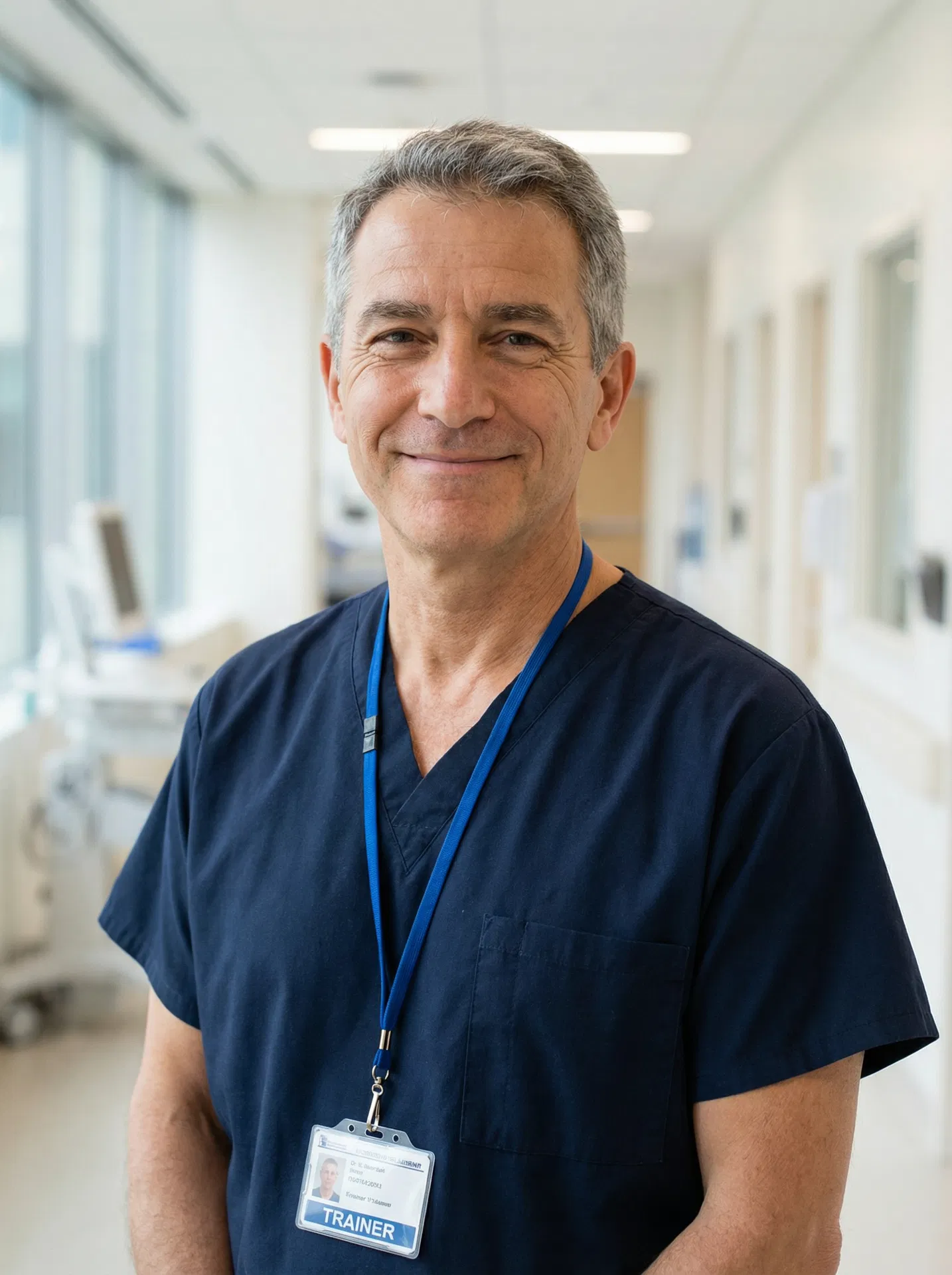
Gary has been qualified for 32 years with experience in medical, surgical and trauma settings. He was the Clinical Practice Development Nurse for a large General Hospital in the North West with responsibility for supporting over 2,500 staff dealing with violence and aggression in all clinical settings.
Gary has worked as a physical intervention instructor since 2002. After leaving the NHS, he worked as a Principal Trainer for an organisation that delivered BILD Accredited Behaviour Support training and worked extensively in the adolescent Secure Estate. During this time, he also delivered Clinical Holding Training for the staff at Great Ormond Street Hospital, as well as consultancy work for Young Epilepsy and a number of Adult Social Care provisions.
Gary then spent 8 years as a Senior Instructor for a well-known organisation that delivers scenario-based Trauma Management Training for armed police and public order medics. Many of the lessons learned during this period have been applied to our courses. This includes the fact that the courses are not only instructional but also realistic.
Gary continues to deliver clinical skills training in a number of clinical settings in both Primary and Secondary Care, including both General and Psychiatric.
Effective Behaviour Support relies on Empathy. A Healthy Culture. Consistency. Effective Communication. Great Team Work. #AimingForZero
Frequently Asked Questions
12 people with 1 Trainer, up to 18 people with 2 Trainers. These ratios are in line with the RRN Training Standards.
Venue supplied by yourselves. We come to you! We will supply you with a detailed venue specification to make a venue easier to source.
2 days (the duration will depend on your needs). The usual start and finish times are 9.30 am to 4.30 pm, however, this can be flexible depending on your needs. There will be a mid-morning and mid-afternoon break as well as a lunch break. Lunch is not provided.
Click on the 'Download Info Pack' button to receive your copy of our PDF info pack (delivered instantly via email). The pack includes full course details and costs.
Yes. The course content considers the internal differences in aircraft configuration, including the positioning of seats and equipment specific to your service's helicopter and ambulance setups.
Gary Collins (RGN) has been qualified for 32 years with experience in medical, surgical and trauma settings. He has 8 years of experience in scenario-based trauma management training for armed police and public order medics, as well as extensive clinical holding training experience at Great Ormond Street Hospital.

Get More Info and Book Your Course
For more information on the course and for details on pricing and upcoming dates, click the button below, or email us at [email protected].
Alternatively, if you have unanswered questions or want to discuss if this course is right for your team, use the "Book a Call" button to arrange a convenient time to speak with us.